The Wellness Journal
How to Compare Mobile IV Appointment Quotes in Sydney
Published 12 November 2026
Wellness n Co Journal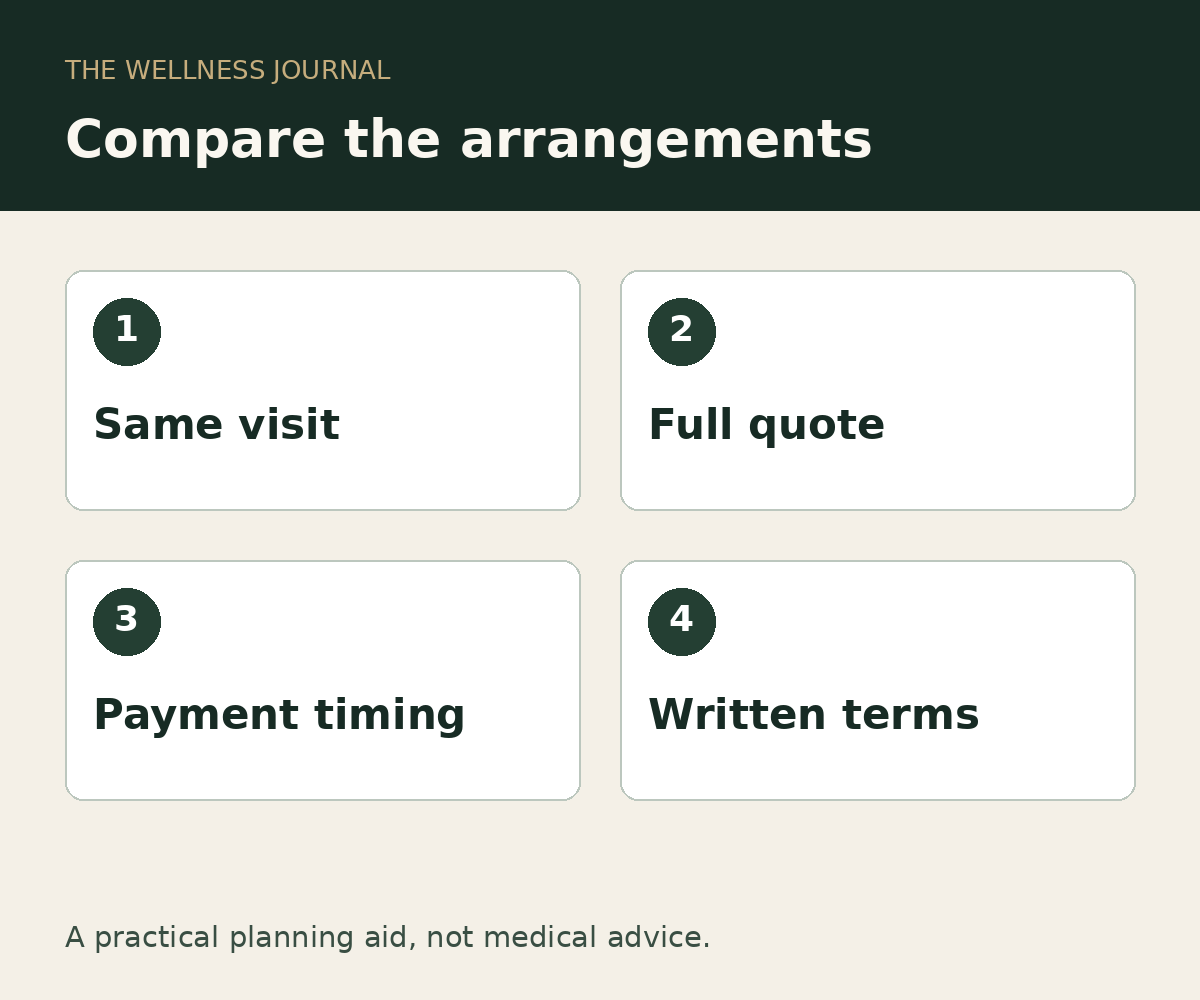
Two advertised prices can describe different arrangements. One may be a starting treatment price, another a minimum appointment spend, and another a visit charge with additional items. Before deciding, ask each provider to explain the quote for the appointment you are actually considering.
This checklist helps you organise that conversation. It does not establish whether an IV procedure is appropriate for you; that requires an individual clinical assessment.
Start with the same visit details
Give each provider the same suburb, type of setting, preferred date and number of people making enquiries. A quotation for one person at home may differ from arrangements for a hotel or a group. Ask whether your address and preferred window can be accommodated, rather than assuming a Sydney service-area page means a time is available.
Keep personal health information in the provider's appropriate clinical channel. The first practical comparison can cover location, scheduling and charges without putting medical details into a general enquiry or shared worksheet.
Separate the price labels
Ask what the advertised figure represents:
- Starting price: What circumstances does it cover, and what could change it?
- Minimum spend: Is this an appointment threshold rather than a separate charge?
- Mobile or travel fee: Is it included, charged per visit, or dependent on your address?
- Deposit: Is it credited to the final bill, and what happens if plans change?
Do not add a minimum spend to the treatment price without checking how the provider applies it. Equally, do not assume that paying a deposit settles the whole appointment. Ask for the amount payable overall and when each payment is due. Record whether each amount is per person or per visit, and whether any stated taxes or unavoidable fees are included.
The ACCC's price-display information explains why consumers should look beyond a headline price and consider the complete amount, including applicable charges.
Ask what the quote covers
A useful comparison records the inclusions beside the total. Ask whether the proposed quotation addresses the assessment, any prescribing arrangements, the attending professional, equipment, travel and aftercare information. Record anything the provider says is additional or still to be determined.
If the final treatment decision has not been made, ask how the price will be explained and agreed once the proposed care is known. Do not choose a procedure or extra item simply to reach an appointment minimum. A commercial threshold does not determine clinical suitability.
Clarify who is responsible
Ask who assesses suitability, who would attend the appointment, and who would prescribe if prescribing is required. Request the information you need to understand their professional role and check relevant registration.
Also ask how questions are handled before and after the visit. A convenient location or a polished website cannot answer these questions on its own. Price differences do not, by themselves, establish which service is clinically appropriate.
Check what happens if circumstances change
Read the terms before paying. Ask about cancellations, rescheduling and any charges if the appointment cannot proceed. Distinguish a change to your plans from a clinical decision that treatment is unsuitable; ask the provider to explain the policy that applies to each. Ask whether an assessment or visit charge remains payable if treatment does not proceed, and request the answer in writing rather than assuming that every charge is refunded.
If an amount depends on assessment, travel or another unresolved detail, mark it as unconfirmed. Do not treat an estimate as a fixed quotation or infer a refund promise from an informal description.
Make the written quote easy to compare
Keep the date of each quote, the number of people it covers and any expiry date beside the amount. If a provider gives a per-person figure and another gives a group total, ask for both figures on the same basis. Do not divide a group price unless you know which charges apply to each person and which apply once to the visit.
Ask which parts of an estimate are confirmed and what would change the total. If an extra service is optional, record it separately so you can compare the arrangements you actually requested. Keep a written record of the quoted inclusions and payment schedule.
Use a comparison worksheet
Copy these questions into your notes and complete one column per provider. “Not yet confirmed” is a useful answer: it shows what still needs clarification.
| Question | Provider A | Provider B |
|---|---|---|
| Is this visit available for my address and preferred window? | ||
| What does the headline amount represent, and is it per person or per visit? | ||
| When was this quote provided, and when does it expire? | ||
| What is included in the proposed total? | ||
| Which charges are unavoidable, optional or still unconfirmed? | ||
| When will the full amount be confirmed? | ||
| Is the deposit credited, and when is the balance due? | ||
| Who assesses, attends and prescribes where required? | ||
| What cancellation or unsuitability terms apply? | ||
| Could any assessment or visit charge remain payable if treatment does not proceed? | ||
| Where is the written quote or policy that confirms each answer? | ||
| Where do appointment-specific aftercare questions go? |
Compare the completed answers rather than the headline figures alone. If an important detail is unclear, ask for clarification before committing.
Before making a decision
Keep the completed comparison with the written quotes. Ask the provider to clarify missing information before making a commitment. The worksheet records commercial arrangements; it does not determine whether an IV procedure is appropriate for you.