The Wellness Journal
Planning for pets during a mobile IV appointment in Sydney
Published 15 November 2026
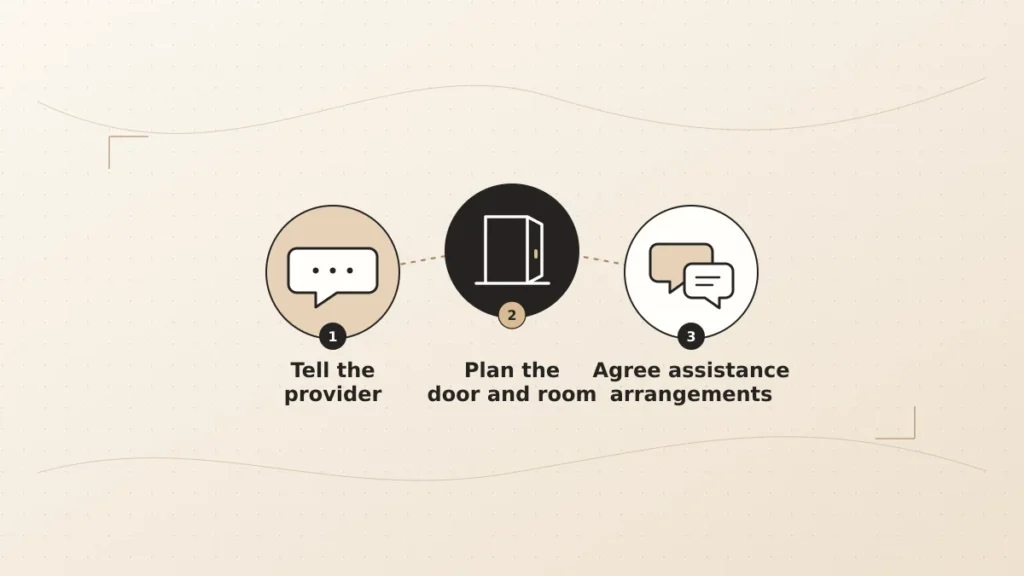
Wellness n Co JournalIf you have a household pet, tell the provider before the appointment. Agree who will meet the nurse at the door and where the pet can settle away from the entry and appointment area. If you rely on an assistance animal, say so when making arrangements. It is not a pet, and a plan for a household pet is not the starting point for your access needs.
You do not need to send a detailed explanation of your health in a logistics message. Start with how the nurse can get in, what may make arrival difficult and what you need to plan together.
Start with the door, not the animal’s temperament
Think about what happens in the first minute. Will ringing the bell bring the dog to the door? Could a cat slip into the corridor when someone brings a bag inside? Is there a shared gate that needs to be closed before the front door opens? It is usually more useful to describe the route and what happens at the door than to say a pet is friendly or quiet.
For a household pet, use a familiar arrangement that you know works, such as another suitable room with the door closed or a housemate looking after the pet in a separate area. If you will meet the nurse yourself, set this up before answering the door so you do not have to manage the pet and show someone in at the same time. Ask the provider if you are unsure how long the arrangement needs to be in place.
This is about planning a home visit, not a universal rule across healthcare. For example, St George and Sutherland Hospitals’ home midwifery leaflet asks households to secure family pets during that service’s visits. A mobile appointment has its own arrangements. Check directly rather than assuming a rule from another service applies.
Decide where the appointment will take place
Pick a space you can describe simply: for example, the lounge room at the end of the hall, not the spot the pet normally uses. Make sure the path is clear from the door to that space and that the pet’s usual route for food, water or outdoor access won’t send it back across the entry at the same time.
Leave the pet in a place that works for the household, not a common hallway or an unfamiliar space just to get it out of the way. If the only practical room doubles as the pet’s space, tell the provider before the day. You can work out together whether you need a different room, someone to help at home or an adjustment to the visit arrangements. Do not wait until arrival to mention a layout that you know will be difficult.
In a Sydney apartment, include the handover
A shared lift or lobby changes the plan. Say whether the nurse needs to buzz from the street, go through a second door or wait for you at reception. If a housemate is taking a pet out at about the same time, agree who will handle each route. A short message such as “Please buzz from the street; I’ll meet you inside the gate and show you to the lift” is often clearer than a building name on its own.
Check what applies to your building and its common areas. If someone plans to take a dog out while the nurse arrives, the City of Sydney’s dog park guide shows designated areas and explains the signs for on-leash, off-leash and prohibited spaces in that council area. It is not a guide to every Sydney council or to private building rules. For the door, intercom and lift details, see our Sydney apartment arrival guide.
If you rely on an assistance animal, discuss what works for you
The NSW Office of Local Government explains that assistance animals are not pets. If you use one, tell the provider what you need it to do during arrival and the appointment, and ask the provider to confirm an arrangement with you. You could say: “I use an assistance animal and need it to stay with me. Who can I speak to about the room and arrival arrangements?”
Do not assume you have to separate from an assistance animal because someone else was asked to secure a household pet. The useful discussion is about what support you need and how the visit can be arranged. If the first message doesn’t resolve it, ask who can discuss the plan with you before the visit. If there are other adjustments to discuss, our communication and access guide can help you put those requests into words.
If the plan changes on the day
Let the provider know if the original room is no longer available, a pet sitter can’t come or the entry has changed. Agree what to do before opening the door rather than trying to solve it while someone is carrying things inside. A visitor plan does not guarantee the appointment can proceed; if the arrangement no longer works, ask about the next step before the nurse arrives.