The Wellness Journal
After a mobile appointment: how to check a receipt or request an itemised bill
Published 14 November 2026
Wellness n Co JournalIf you know what you paid but not how the total was worked out, ask for an itemised bill. If you know what you were charged but need to check whether the payment went through, look for a receipt or other proof of the transaction. You might find both answers on the same document. Check the amounts and payment status rather than relying on the heading alone.
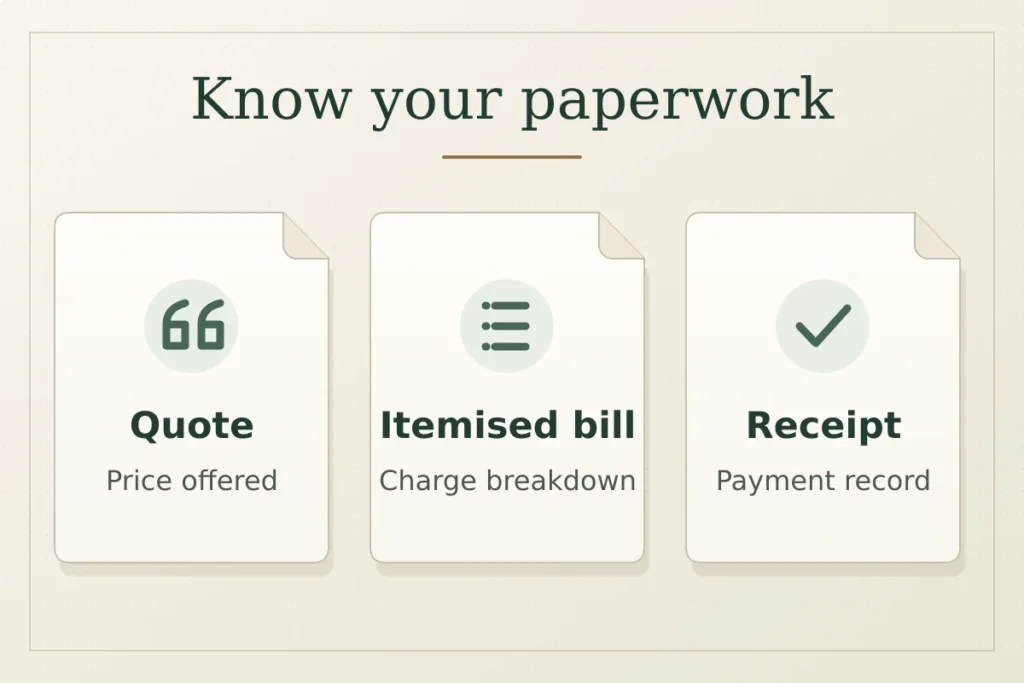
Quote, bill or receipt: which do you need?
A quote is the price proposed before the appointment. It helps you see what was included, what was conditional and what you agreed to. The Sydney appointment quote guide explains what to compare before booking. For a billing question after the visit, start with the copy of the quote you actually accepted, plus any written changes made later.
A bill or invoice shows what the business is charging you. An itemised version explains how that figure was calculated. Look for the total, any amount already credited and the balance still due. An invoice that shows an outstanding balance is not evidence you paid it. An invoice marked paid may also serve as your payment record if it contains the relevant transaction details.
A receipt gives you a record of the transaction. The ACCC’s guide to receipts and bills lists the key details to check: the business name, its ABN (or its ACN if it has no ABN but has an ACN), the service supplied, the date of supply and the price. If you paid a deposit on one day and the balance later, you may have more than one payment record. Keep both alongside the bill.
The service date and payment date can differ. For example, a card statement might show Friday’s deposit, while the bill refers to Monday’s appointment. The statement can help you find the payment, but it usually won’t tell you which part of the appointment it covers. Match the amount and reference where you can. If more than one visit appears on the same bill, ask the business to identify the charge and any credit for the visit you’re checking.
Check whether the deposit was applied
Put the quote, bill and any payment records next to each other. Match the appointment date, then check three figures: the total charge, the amount already paid and the balance due. If there was a change after the quote, find where the new amount was agreed. If you can’t, ask the provider to point you to it.
Here’s a fictional example, not Wellness n Co pricing. You agreed to $240 for a mobile appointment and $40 for travel, so the total is $280. You paid a $50 deposit. If the agreed terms say that deposit goes towards the total, the balance should be $230. The paperwork should make it possible to distinguish the $280 total from the $230 still due.
If a payment reminder still asks for $280, don’t assume the deposit was lost or that you’ve been charged twice. Check whether the reminder was issued before the deposit was applied, and ask the provider to confirm the amount outstanding. If the business says your balance is paid, ask which document shows that so you can keep it with your records.
When to request an itemised bill
If the invoice only shows a total and you want to understand it, request a breakdown. For a consumer service covered by the Australian Consumer Law, section 101 gives you 30 days from when the service was supplied or when you received the bill, whichever happened later, to request an itemised bill. The supplier must provide it within seven days of your request and cannot charge you for it.
The breakdown should explain how the price was calculated. If applicable, it should also show the hours and hourly rate for labour and a list of the materials used and their charges. A fixed-fee service may have no separately billed hourly rate or materials charge; ask what the fee includes.
What to say when you ask
Use a contact method you already know belongs to the provider. Start with the appointment date and booking reference, then ask about the specific line or credit you can’t reconcile. A short message is usually enough:
I’m checking the bill for my appointment on [date], reference [reference]. Could you please send me an itemised bill showing how the total was calculated and confirm whether my deposit was credited? My copy shows [amount] due, but I expected [amount].
Keep your original documents and the provider’s reply, even if they send a corrected version. You don’t need to include treatment details, card numbers or a full bank statement in an initial billing message. If that first exchange doesn’t resolve the discrepancy, keep a dated note of what you asked and what remains unclear. That way you can follow up with one specific question rather than starting again from the beginning.