The Wellness Journal
Someone else arranged your Sydney mobile IV appointment? What to confirm
Published 15 November 2026
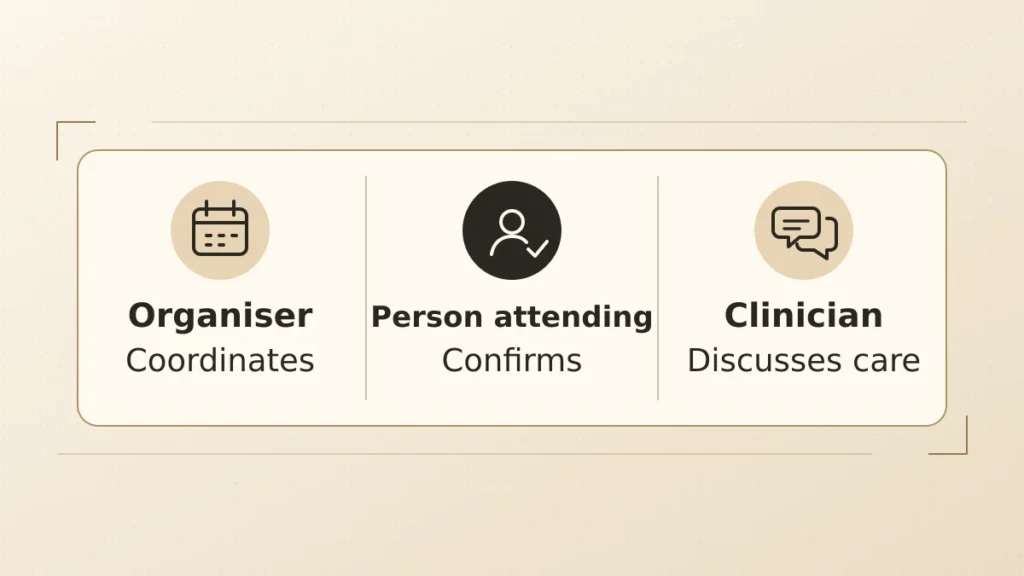
Wellness n Co JournalIf someone else got in touch about a Sydney mobile IV appointment for you, ask whether they made an enquiry or received a confirmation. Then contact the provider directly to check the date, Sydney time and venue, and ask which phone number or email address they’ll use for changes. The person who helped organise the visit can still coordinate access without being the contact for questions about your care.
Start with what the organiser actually received
A forwarded message can be useful, but an offered time and a confirmed appointment aren’t the same thing. Before you plan your day around it, ask the organiser for the provider’s name, the date, time and suburb they discussed, and any reference or confirmation sent by the provider. If they only received a question about availability, treat the visit as an enquiry until the provider confirms its status.
A screenshot can leave out a later reply, so don’t assume the time in it is still current. If the organiser and provider gave you different times, ask which one applies and whether the venue is unchanged. Until you know what was arranged, avoid placing another booking to fix it. You could end up discussing two separate requests.
Ask who will get the next update
Use a contact route you’ve verified independently, rather than sending information to an unfamiliar number in a forwarded message. You can start by asking how the provider would like you to verify the arrangement and whether they can use your own contact details for updates. At Wellness n Co, the contact page explains how to start an enquiry. It isn’t a place to send medical information.
Here’s a short message you can adapt:
Hi, someone got in touch with you about a mobile visit for me in Sydney on [day]. Could you tell me how to check whether it’s confirmed? I’d like to receive any timing or venue updates directly. Please let me know the best way to verify the details with you.
Don’t add your medical history, documents or detailed access instructions to that opening message. If the provider needs further information to locate the request, ask what they need and how to share it. Don’t assume they can discuss the arrangement just because you know the organiser’s name.
Keep the organiser involved where it helps
Give each person a clear job. For example, a colleague might reserve a private room and be the building contact, while you receive updates about your appointment. At a hotel or apartment, the person who knows the visitor process might still help with arrival. Ask the provider which details need to reach that person and which should stay with you.
If the organiser is paying, ask the provider what was agreed, who will receive the receipt and who needs to be involved if something changes. If a friend wants to join the conversation for support, say what help you want and ask how that can be arranged. You don’t have to send the same information to everyone. Our guide to sharing information privately before a mobile appointment covers questions to ask about where clinical details should go.
Correct mistakes before the visit
Ask the provider to read back the practical details they can confirm: the date, Sydney time, suburb, venue and best number for arrival. If you’re in an apartment complex or hotel with more than one entrance, check the building and door as well as the street address. Tell the organiser about any change they need for their part, rather than relying on an old group message to keep everyone in sync.
If the wrong name, contact number or venue was supplied, ask the provider how to correct it and whether you’ll get an updated confirmation. If it’s the venue that needs to change, use our guide to changing the address after booking to check what to confirm before relying on the new location.
Ask how you’ll speak with the clinician
Arranging a location and time is separate from a clinician deciding whether care is suitable. Ask how you can speak with the clinician directly about any questions, and how they’d like you to share information they request. The Australian Charter of Healthcare Rights includes partnership, information and privacy. The NSW Health Privacy Principles also explain why accurate details and, where practicable, collecting health information from the person concerned matter.
Before you rely on the arrangement, check three things: is the appointment confirmed, who will get the next update, and how can you speak to the clinician yourself? Once you know those answers, the person who helped arrange it can keep helping without having to pass every message between you and the provider.