The Wellness Journal
Reading vitamin supplement labels in Australia: what AUST numbers mean
Published 14 November 2026
Wellness n Co JournalA vitamin bottle can carry reassuring language without explaining how its claims were checked. For Sydney readers comparing supplements, the small AUST number is a useful starting point. It identifies a medicine’s entry in the Australian Register of Therapeutic Goods (ARTG), not a recommendation that you should take it.
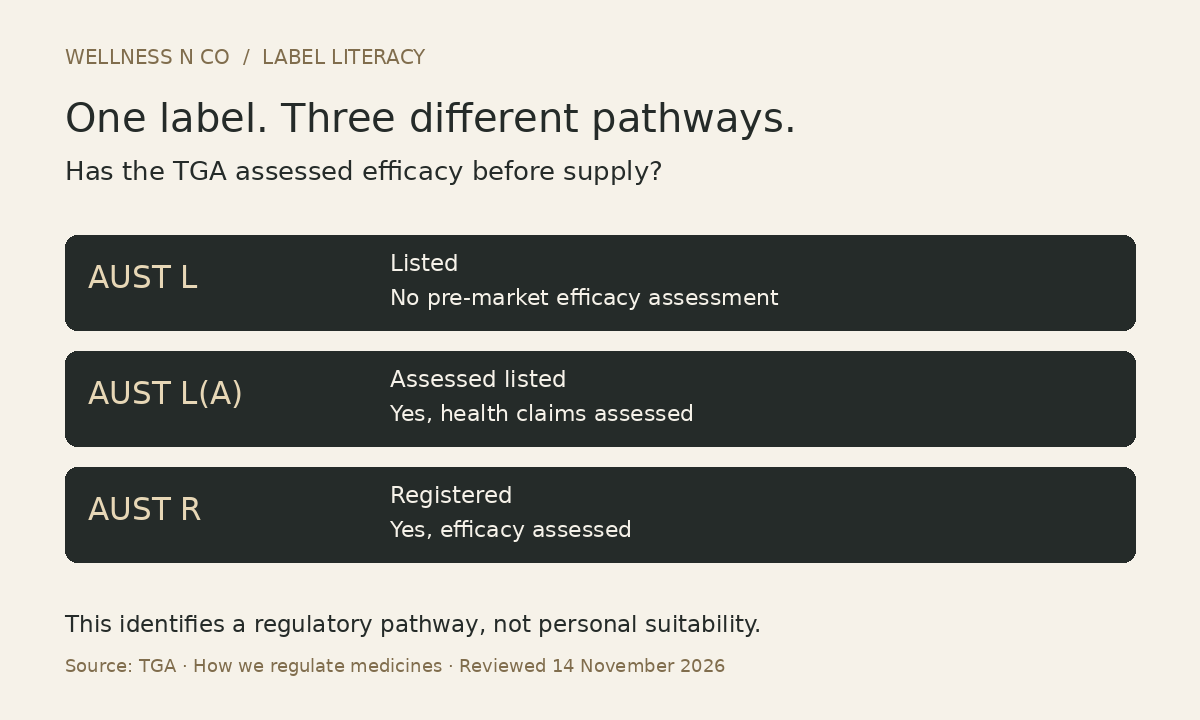
What do AUST L, AUST L(A) and AUST R mean?
The distinction is about the regulatory pathway. The TGA explains the three pathways as follows:
AUST L: listed medicines. The TGA does not assess each product’s efficacy before it reaches the market. Listed medicines use permitted lower-risk ingredients and claims. Sponsors must hold evidence supporting their claims and certify compliance with relevant requirements; products can undergo post-market review.
AUST L(A): assessed listed medicines. The TGA assesses the evidence supporting the specific claimed indications for efficacy before supply.
AUST R: registered medicines. These undergo pre-market assessment of safety, quality and efficacy. The category includes different kinds of medicines; it is not a vitamin quality score.
Read the whole label, not just the number
Use the TGA’s medicine-label guide alongside the pack. Look for the active ingredients, the amount stated, directions, warnings, expiry and storage information. Notice whether an amount is described per tablet, per capsule or per recommended dose: those are different ways of presenting the information. Do not infer an individual dose from this article.
Check whether a claim refers to traditional use rather than scientific evidence. A label can also omit some inactive ingredients; if you need a complete ingredient answer, ask the pharmacist or product sponsor rather than assuming that an unlisted ingredient is absent.
A simple comparison worksheet
For each product, write down: exact name; AUST number; active ingredients and stated amounts; directions and warnings; your unanswered question. Keep the pack or a clear photograph with that note. This makes a conversation about two similar-looking products more precise without turning the comparison into a ranking.
If you already take medicines or supplements, add the exact product to your medicines and supplements list. Keep the information with your personal appointment records, not in a public comment or shared workplace document.
What if there is no AUST number?
Do not decide legality or safety from that fact alone. The TGA describes exceptions and access pathways for medicines without an AUST number. Ask a pharmacist or the TGA to clarify the particular product. This guide is about medicine labels, not every food, cosmetic or overseas product.
Comparing packaged foods instead? Our guide to per-serving and per-100g food labels uses worked examples to explain portions and equal-quantity comparisons. Food nutrition panels and medicine labels answer different questions.
The question the label cannot answer
“Is this appropriate for me?” needs a separate conversation. A registration or listing number does not establish a deficiency, remove interaction risks or show that a different formulation or route of administration is appropriate. Ask your pharmacist or treating clinician before making a change. This educational guide does not recommend a supplement, an IV treatment or a dose.
Sources checked 14 November 2026. General Australian label literacy information, not personalised medical advice.