The Wellness Journal
No email after booking a Sydney mobile IV appointment online?
Published 16 November 2026
Wellness n Co JournalIf you clicked the final booking button but didn’t get an email, check what the final screen said. If it said the appointment was booked, save the details. If the page froze, closed or never gave you a clear answer, ask the provider to check the original attempt before booking or paying again. A missing email alone tells you neither that the booking failed nor that it succeeded.
Start with the screen you actually saw
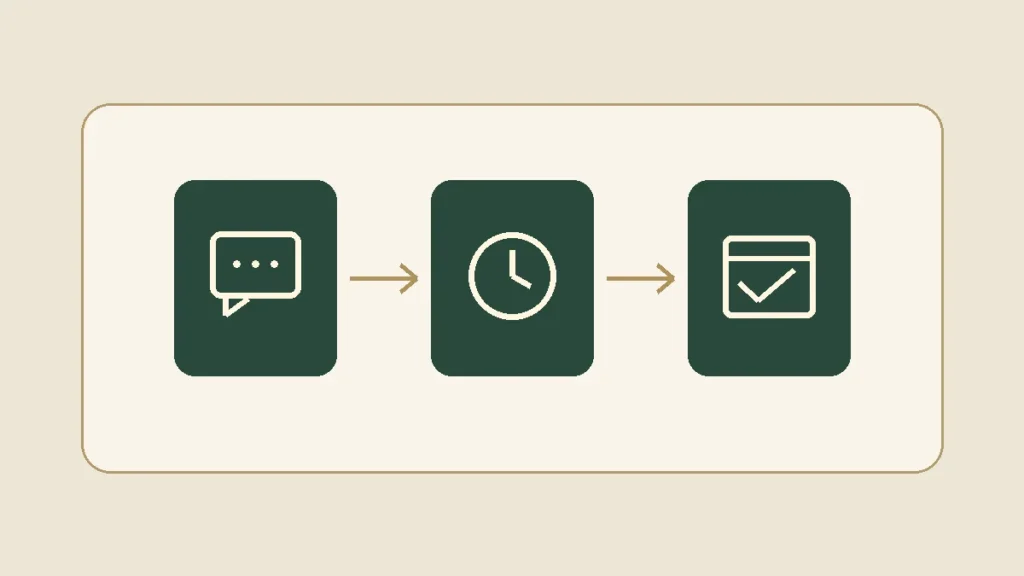
There are three useful distinctions. A page that says the appointment is booked and shows a date and time is stronger evidence than a page that says your request was received. Browsing available times without submitting isn’t a booking. But if the page stopped loading after you submitted or took you back to a blank form, you can’t tell from that screen whether the provider received your details. Looking at the booking calendar again won’t settle it: you don’t know why a time appears available or unavailable.
If you can still see the final screen, note the wording, the Sydney date and time you selected, and any booking reference shown. You don’t need to keep an image containing your health details. If the browser has already closed, write down approximately when you pressed the final button, not just the date you wanted the visit. Those are two different times, and the first gives the provider something more useful to look for.
Check for the message without relying on it
Look for the provider’s name in your inbox and junk folder, especially if you switched between personal and work email during the booking. If you think you mistyped your address, tell the provider when you follow up. Don’t submit a second booking just to correct an email address without finding out what happened to the first one.
Cliniko’s online booking guide says a confirmation email depends on the provider’s appointment-type settings. That’s a feature of the booking system, not a statement about the settings for your particular visit. If you’re unsure, use the provider’s independently published contact details and ask them to look for the original attempt. Seeing an email or reminder also doesn’t settle a conflict if it refers to another date or a different venue.
If you see a charge, ask how it’s linked
A card entry marked pending is not the same as a receipt, and a receipt is not the same as a confirmed appointment. Don’t make a second payment solely because you didn’t get a confirmation email. Keep any receipt and ask whether the provider can match it to the attempt. If the provider can’t identify the payment or you don’t recognise it, check with your card issuer using its official contact details. Don’t send a full card number, security code, bank screenshot or clinical form in an ordinary enquiry.
If a new text asks you to pay, don’t assume it’s the next step in your original booking. The guide to checking an appointment text before paying explains how to make contact independently rather than starting from a link in an unfamiliar message.
Ask the provider to check before you retry
You can describe the problem without adding medical details. For example:
I submitted an online request for a Sydney mobile appointment for Thursday 19 November at 2 pm. I pressed the final button around 11 am on Tuesday, but the page closed before I saw a confirmation. Could you check whether there’s already a booking for that time before I try again?
If the provider finds the appointment, ask for the booked date, time and visit location, or how to confirm the location if it’s still open. If the provider finds only an enquiry, ask whether they need a reply to turn it into a booking. If the provider can’t find it, and no payment issue remains, you can ask whether to start a new booking. Don’t assume the earlier time is still available.
If somebody else submitted the details on your behalf, use the guide for appointments arranged by someone else rather than trying the same booking twice in different names. Once you know what happened, keep the final confirmation in one place. It tells you whether a visit is booked, not whether any particular treatment will go ahead.